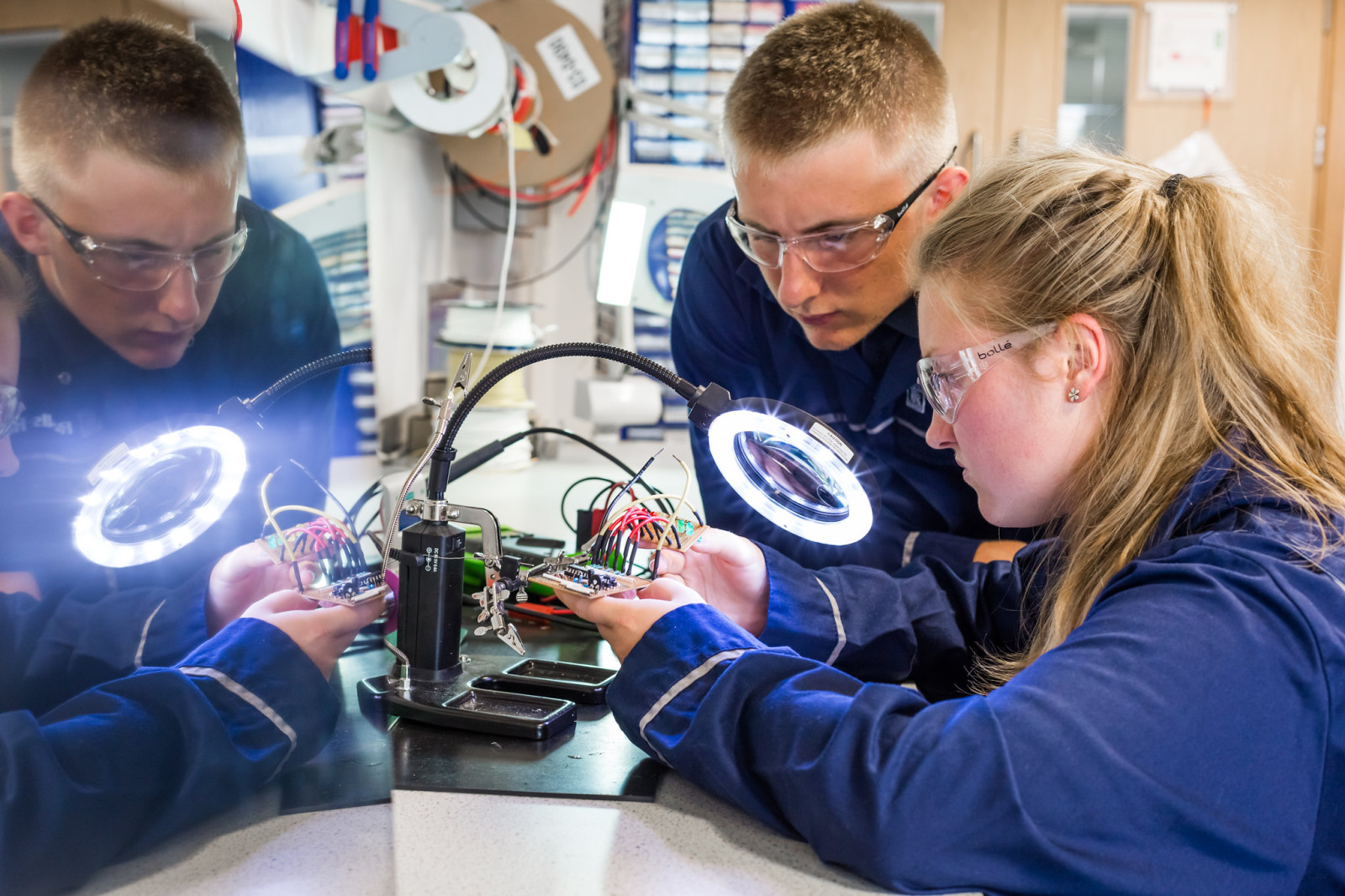
With skilled engineers increasingly difficult to find, T Levels offer manufacturers a new way to identify and develop future talent. Yet awareness remains surprisingly low, leaving many employers unsure where T Levels fit into the wider skills picture.
Are T Levels another qualification? A replacement for apprenticeships? Or yet another initiative that adds complexity to an already confusing skills landscape? The truth is much simpler, says Neil Davies, Head of Engineering at University College Birmingham.
“The idea behind T Levels is for students who would like to do an apprenticeship, but may not have found an apprenticeship opportunity straight from school,” he explained during Made in Group’s latest National Online Industry Meet-Up.
Bridging the gap into engineering
Introduced in September 2020, T Levels are two-year technical qualifications for 16–19-year-olds, sitting alongside A Levels and equivalent to three A Levels. They create a pathway into technical careers, combining classroom learning with industry experience while giving employers a chance to identify future talent before making a hiring decision.
The qualification is designed to provide a broad foundation in a subject area before students progress into apprenticeships, higher-level qualifications or employment. Engineering and manufacturing account for three of the 21 T Level routes currently available:
- Design and Development for Engineering and Manufacturing
- Engineering, Manufacturing, Processing and Control
- Maintenance, Installation and Repair for Engineering and Manufacturing
University College Birmingham delivers all three pathways, alongside numerous further education colleges, sixth forms, and universities across the UK. Individual providers may specialise in different pathways, so Neil encouraged employers to speak to local colleges to understand what is available in their area.
Unlike traditional classroom-based qualifications, T Levels place much greater emphasis on practical learning and employer involvement.
Over two years, students complete:
- Core technical learning units – covering key principles and underpinning knowledge.
- An employer-set project for students to apply core skills to design, cost and present a solution for a realistic workplace scenario.
- An occupational specialism where learners must design, make and test a practical product or solution.
- A minimum 365-hour industry placement.
That final element is what makes T Levels particularly valuable to employers. Rather than spending a few days observing a workplace, students gain meaningful experience over an extended period. Placements can be delivered one day a week, in block placements or a mixture of both, allowing employers, students and colleges to find an arrangement that works.
Why should manufacturers get involved?
Recruitment can often feel like a leap of faith. T Levels significantly reduce that risk, Neil said. Instead of interviewing someone you’ve only met once, you’re able to work alongside a student over several months, understand how they approach problems, assess their attitude and work ethic and see how they fit within your business.
Many employers describe it as an extended interview. If the placement goes well, you’ve already identified a potential apprentice or future employee. If it doesn’t, you’ve still helped develop the next generation of engineers while strengthening links with local education providers.
The benefits go beyond recruitment, Neil added. Students bring fresh ideas and up-to-date technical knowledge. Employers gain a closer understanding of emerging skills and technologies, while colleges benefit from direct industry feedback that helps keep courses relevant.
Addressing employer concerns
Many of the questions raised during the discussion group following Neil’s talk centred on hosting a placement. One of the biggest misconceptions is cost. Unlike apprentices, T Level students aren’t employees and there’s no requirement for businesses to pay them during their placement.
Colleges handle much of the administration, including placement agreements and supporting paperwork, while employers are responsible for providing supervision, a safe working environment and any necessary PPE or specialist equipment.
The bigger investment is time. Neil encouraged employers to think of T Level students in much the same way as new apprentices. They won’t arrive as ready-made employees with years of experience, but they will arrive with technical knowledge, enthusiasm and a genuine interest in engineering. Employers should expect to provide guidance, support and an introduction to workplace expectations as students settle into - what is for many - their first professional environment.
Capacity was another common concern. “If you’re not ready to host a full placement, start smaller,” Neil said. He also encouraged employers to speak to their local college before taking on a student to understand what learners have already learnt to ensure realistic expectations from the outset.
There are plenty of ways to get involved
Offering an industry placement is one of the most valuable ways employers can support T Levels, but it isn’t the only option, Neil said. Businesses can also deliver guest talks or career sessions, provide live engineering projects for students to solve, offer factory visits, support mock interviews, sponsor equipment or resources, attend career fairs or join employer advisory boards to help shape courses. A quick and easy way to help is to share apprenticeship or job opportunities with colleges.
These activities not only help students understand what modern manufacturing looks like, but they also allow employers to build relationships with local colleges and build confidence before deciding whether to offer placements in the future.
Building a stronger skills pipeline
A clear message from both Neil’s presentation and the discussion that followed is that colleges can’t deliver industry-ready engineers on their own. Demand for engineering placements continues to grow, but colleges need more manufacturers willing to open their doors.
The success of T Levels depends on employers engaging with education, whether through placements, curriculum support or simply opening their doors and showing students what engineering careers really look like.
Rather than waiting for the perfect candidate to appear, manufacturers have an opportunity to develop one. As more students complete T Levels over the coming years, businesses that engage early are likely to be first in line for a growing pool of motivated young engineers already committed to a career in industry.
Join our next National Online Industry Meet-Up!
The opportunity to openly discuss challenges, opportunities and solutions is what makes the Made in Group’s National Online Industry Meet-Ups so invaluable.
During these captivating virtual events, industry experts, thought leaders, and professionals gather to share knowledge, insights and best practices. The goal is to foster collaboration, inspire innovation, and drive growth within the manufacturing community.
Each meet-up features three engaging talks from Made Members, focusing on sharing best practices and exploring key themes shaping the future of industry, including global trade, skills and training, technology and sustainability.
These are followed by interactive Discussion Groups where members can exchange ideas and gain further insights on their chosen topic.
We look forward to seeing you at the next one:
*Header images courtesy of This is Engineering and Rolls-Royce PLC